
Guides
Reading fitness studios with a sceptical eye
This page names no fitness studios. It lists twenty-five things to observe when you visit one, and how to record them so the visit is worth something.
What to take away
- No studios are named here. A list of businesses with invented commentary attached is not research, and it says nothing checkable about any of them.
- What is worth having is a way to look. Visit studios and record twenty-five specific observations rather than forming an impression.
- Most of what you can learn from another studio is operational and visible in one visit: capacity, turnaround, and how a stranger is treated.
- Record the observations the same way every time or the comparison is worthless.
- Do not copy a timetable. Their peak hours belong to their catchment, not to yours.
Lists of studios to watch are a genre and they carry no information: nobody writing at a distance can verify a claim about a real business, and the commentary attached to each name is usually invented. What follows is the alternative, which is a way of visiting studios that actually teaches you something.
Why nothing is named
A claim about a named business is either verified or it is not worth making. This page cannot verify what any particular studio's model is, how it performs, or whether its approach would transfer, so it names none.
What is verifiable is what you see with your own eyes in a room you are standing in. So go, pay for a class, and observe.
Twenty-five observations
Record these in the same order every time. Take fifteen minutes afterwards, not during, and write them down while you still remember.
Twenty-five studio observations
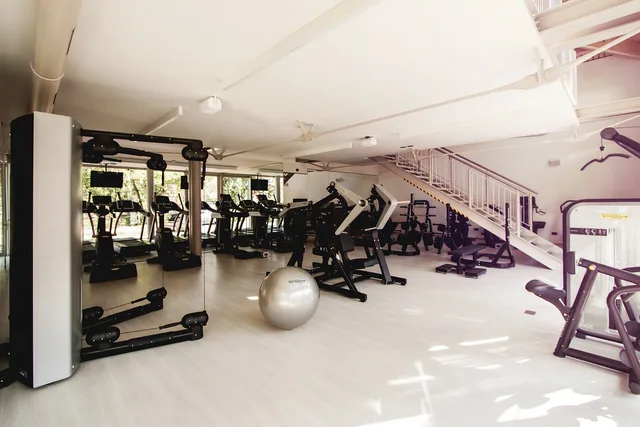
- Room and capacitystations, sightlines, circulation, storage
- Equipment condition and anything out of service
- Start, finish, gap and reset between classes
- Entrance when two classes overlap
- Being newidentified, told, spoken to, asked back
- Prices, conditions and timetable before booking
- Booking, full classes and the waitlist
- Staff, online vs wall schedule, noticeboard
The room and its capacity:
- How many people were in the class, and how many stations existed.
- Whether the last station was one you would want.
- Whether you could hear the instructor from where you were.
- Whether you could see the instructor from where you were.
- How much circulation space existed once the class was full.
- What the equipment condition was, and whether anything was out of service.
- Where storage sat, and whether it could be reached during a class.
Time and turnaround:
- Whether the class started at its published time.
- How long the gap was to the next class.
- Whether the room was reset before the next class needed it.
- How the entrance handled two classes overlapping.
- Whether the class finished when it was supposed to.
Being a stranger:
- Whether anyone identified you as new before the class.
- What you were told, and whether it was enough.
- Whether the instructor knew you were new.
- Whether anyone spoke to you afterwards.
- Whether you were asked to book again, and how.
The commercial surface:
- What was published about prices and conditions, and where.
- Whether the timetable was legible before you booked.
- Whether booking worked on the first attempt.
- What happened when you tried to book a class that was full.
- What the waitlist told you and how quickly.
The operation:
- How many staff were visible, and what each was doing.
- Whether the schedule shown online matched the schedule on the wall.
- What was on the noticeboard about cancellations, freezes, and closures.
What to do with the record
Compare across visits, not against your own studio's best day. Twenty-five observations from six studios will show you a pattern that no amount of reading produces, and most of it will be about turnaround, capacity, and how a stranger is handled.
Where each observation belongs
Observation group
- Items 3-6
- Layout and equipment
- Items 8-12
- Turnaround
- Items 13-17
- Newcomer sequence
Where it belongs
- Items 3-6
- Floor plan and setup
- Items 8-12
- Class reset and timing
- Items 13-17
- How a stranger is handled
Then take the operational items back to your own room. Items 3 to 6 are layout questions, and they belong with the floor plan and the equipment on it and with what is actually installed in the new owner's equipment checklist. Items 13 to 17 are the newcomer sequence, and items 8 to 12 are turnaround.
What not to copy
Do not copy a timetable. Their peak hours are a property of their catchment, and yours may be different by two hours in either direction. That is the point of testing your own, which is part of what expansion actually requires.
Do not copy a price. You cannot see their room size, their rent, or their pay structure, and their number is the output of all three.
Do not copy a format on the strength of one enjoyable class. Check whether it needs different equipment, a different class size, or any different permission where you trade. Those questions belong in the register described in the map of who owns which compliance question.
And do not attempt to recruit their instructors on the day. It is a small trade, word travels, and an instructor who leaves one studio for a slightly better offer will do it again.
Visiting responsibly
Pay for the class. Do not misrepresent who you are if asked directly. Do not photograph the room without permission, and do not repeat anything a member tells you as though it were a fact about the business.
If you would be uncomfortable with a competitor doing it in your room, do not do it in theirs.
The wider research
Observation of other studios is one input and a limited one. The Small Business Administration's business guide covers the structured market-research work that sits around it, and the Bureau of Labor Statistics profile of fitness trainers and instructors describes the occupation and its working patterns, which is a better source on staffing than anything you will infer from a visit.
Neither of those tells you what a competitor's business looks like from the inside. Nothing does, which is why the twenty-five observable items above are worth more than any list of names, and why staffing questions are better answered through how instructors are hired and trained than by guessing at somebody else's arrangements.
Common questions
Will you not name any studios at all?
No. Any commentary attached to a name here would be unverifiable, and unverifiable claims about real businesses are not something worth publishing. The observation list gives you better material and it applies to whichever studios are near you.
How many studios should I visit?
Five or six, across a range of formats and price points, in a few different neighborhoods. Beyond that the observations repeat.
Should I visit studios outside my area?
Yes, and it is often more useful, because you can observe without any competitive awkwardness. Just remember that what works in another city may be working because of that city's commuting pattern rather than because of anything they decided.
What is the single most informative observation?
Item 8, whether the class started on time, together with item 9. Nothing else tells you as much about how well a studio is run, and both are visible on a single visit.