Guides
The cost of fitness studio equipment, new and second-hand
New against used fitness studio equipment compared on cost per usable class-hour, including the classes you cannot run while a unit is waiting for a part.
What to take away
- Purchase price is the wrong comparison for fitness studio equipment, new and second-hand. The right measure is cost per usable class-hour over the years you keep the item.
- Downtime is the hidden term. In a room with a fixed class size, a unit out of service is a place you cannot sell in every slot.
- Used equipment is often correct for items that are easy to service and slow to fail, and wrong for anything your peak class depends on.
- Warranty and service coverage are usually the real difference, not build quality.
- Ask what documentation comes with a used item before you ask what it costs.
The new-or-used question is normally argued on price and settled on feeling. It is an arithmetic question, and the arithmetic has a term most buyers leave out.
The comparison, structurally
New
- Outlay
- Higher, and known
- Warranty
- Usually present, with conditions
- Service coverage
- Usually available from the maker
- Parts
- Current, generally stocked
- History
- None to worry about
- Downtime risk
- Lower early, rising later
- Resale
- Falls fastest in the first period
- Best suited to
- Anything a peak class depends on
- Typical examples
- Keiser M3i near $2,400; Concept2 RowErg at $990
Used or refurbished
- Outlay
- Lower, and known
- Warranty
- Often none, or short and from a reseller
- Service coverage
- Depends entirely on the model's age
- Parts
- Risk of discontinued parts on older models
- History
- Unknown unless documented
- Downtime risk
- Higher throughout, and less predictable
- Resale
- Falls slowly from an already low base
- Best suited to
- Items that are simple, plentiful, or easy to swap out
- Typical examples
- Used Keiser M3 at $800 to $1,300; used RowErg at $600 to $800
What new and used equipment costs
Figures below are typical US dealer and resale prices as of 2026, per unit, before tax, freight and installation. Freight on a commercial treadmill or a reformer often runs a few hundred dollars on its own.
| Model | Typical new price | Typical used price | Parts and service |
|---|---|---|---|
| Keiser M3i indoor cycle | about $2,400 | $800 to $1,300 | Belt drive; parts through Keiser dealers |
| Stages SC3 indoor cycle | about $2,700 | $1,000 to $1,500 | Parts through Stages; confirm the model is still supported |
| Schwinn AC Performance Plus with Carbon Blue | $1,800 to $2,200 | $700 to $1,200 | Widely serviced; common in gyms |
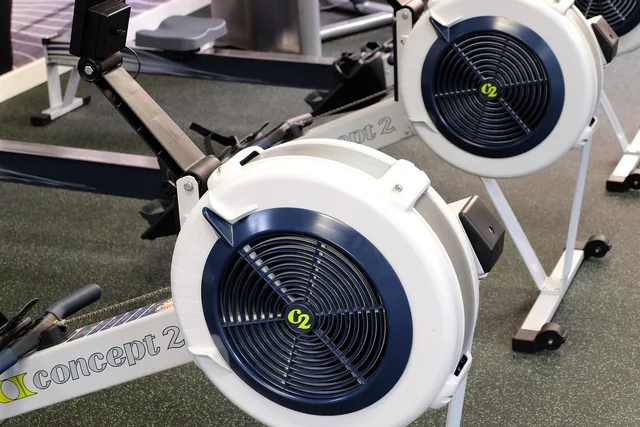
| Concept2 RowErg, Model D | $990, or $1,090 with tall legs | $600 to $800 | Concept2 sells every part direct |
| Concept2 BikeErg | $1,150 to $1,250 | $700 to $900 | Same direct parts model |
| Assault AirBike Classic | $800 to $900 | $400 to $600 | Bearings and monitor sold separately |
| Assault AirRunner treadmill | $4,000 to $5,000 | $1,800 to $3,000 | Curved deck, few moving parts |
| Woodway Curve | $9,000 to $12,000 | $4,500 to $7,500 | Thin service network; check local coverage |
| Balanced Body Allegro 2 Reformer | about $3,800 | $2,000 to $3,000 | Springs and parts from Balanced Body |
| Merrithew SPX Max Plus Reformer | about $4,300 | $2,200 to $3,200 | Parts through Merrithew dealers |
| Rogue Ohio Bar | $325 to $395 | $200 to $275 | Nothing to service; retire it when bent |
| Rogue RML-3 power rack | $1,000 to $1,200 | $600 to $850 | Welded steel, almost nothing to fail |
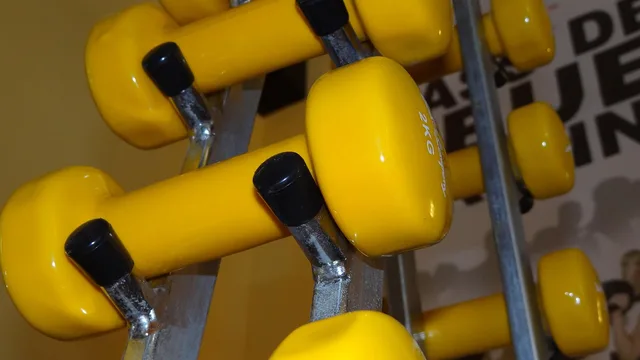
| Rubber hex dumbbells | $1.50 to $2.50 per pound | $0.75 to $1.50 per pound | Check heads and handles for play |
| TRX Suspension Trainer | about $200 | $80 to $130 | Straps and handles are replaceable |
| BOSU Balance Trainer | $130 to $180 | $60 to $100 | Replace the dome when it splits |
Service labor sets the size of D. Commercial fitness technicians typically bill $100 to $175 an hour in US metro markets, with call-out minimums around $150 to $250.
The number that actually decides it
Compare cost per usable class-hour. Define:
Cost per usable class-hour
- OAcquisition cost
- MAnnual maintenance and parts
- YYears kept
- DAnnual class-hours lost to downtime
Then cost per usable class-hour is:
(O plus M times Y minus S) divided by (Y times (H minus D))
D is the term people leave out, and it is the one that flips the answer. A cheaper item that is out of service for two weeks in a busy season has not saved you money. It has removed places from every class in those two weeks, and those places were the scarce resource.
Take a 24-bike studio running 12 class-hours a week per station, 48 weeks a year, so H is 576. A new bike at $2,400, $60 a year in parts, kept five years with $300 back at the end, works out near 84 cents per usable class-hour with four hours of downtime a year.
The same station bought used at $1,100, with $180 a year in parts and $120 back after five years, lands near 70 cents if it loses 36 class-hours to repairs.
Price those lost hours and the used bike stops winning. At a $30 drop-in rate, 36 station-hours out of service are $1,080 of places nobody could buy. In a half-full room, the same downtime costs you far less.
Run this once with your own numbers per candidate item and the decision stops being a matter of taste.
Where used is usually right
The safe used buys are simple items that fail slowly and swap out one at a time. Rowers, air bikes, rubber hex dumbbells, TRX straps and welded steel racks such as the Rogue RML-3 all fit.
Anything you hold in quantity belongs here too, because losing one unit costs nothing when there is a spare on the rack. Concept2 sells parts for the RowErg direct, and small items like seat rollers, bungee cords and drive chains usually run under $50 each.
Buy used for any format you are not yet sure you will keep running, so a format that does not fill never becomes a large commitment. That testing logic sits alongside the layout thinking in the floor plan and the equipment on it.
Where used is usually wrong
Avoid used where one unit equals one place in a class. If the class size is set by the number of working units, then every unit is a station, and a station that is unreliable is a permanent discount on what the room can sell.
A 20-bike cycle room shows the problem. A dead Keiser or Stages bike is a seat nobody can buy in that slot, and the room sells fewer places in every class until the part arrives.
Proprietary parts are the other risk. Consoles and control boards for older commercial treadmills from Life Fitness and Precor can go out of production long before the frame wears out. A treadmill with no available console is close to scrap.
Ask, before buying, who services this model within reach of the studio and whether parts are still made.
What to ask about any used item
- What is the model, the year, and the serial number?
- Where has it been used, and roughly how heavily?
- What maintenance records exist, and may I see them?
- What has been replaced, and with what?
- Who serviced it, and can that business confirm the history?
- Are parts for this model still available, and from whom?
- What warranty, if any, comes with it, and from whom?
- Can it be inspected under load rather than standing still?
If a seller cannot answer questions 3 and 6, treat the item as having no service history and no parts route, and price it accordingly. That is not always a reason not to buy; it is a reason to buy it only where its failure costs you nothing.
Used equipment questions
- Model, year, and serial number
- Where used and how heavily
- Maintenance records available to see
- What has been replaced and with what
- Who serviced it and can confirm
- Parts still available and from whom
- Warranty, if any, and from whom
- Can it be inspected under load
Records, whichever way you go
Start a service log per item on the day it arrives, new or used, recording condition on arrival, what maintenance is due, and every service performed.
For a used item, that log begins with what you were told and what you verified. That record matters later if a seller's claims turn out to be optimistic.
Starting a service log
- Record condition on arrival
- Note what maintenance is due
- Log every service performed
- For used items, log what you were told
- Log what you verified yourself
Insurance policies frequently carry conditions about equipment condition and evidence of maintenance, so the log protects your cover as well as your memory. The Internal Revenue Service's guidance on what records a business should keep sets out what supports asset purchases and expenses. The item-by-item inventory those logs attach to is in the new owner's equipment checklist.
Safety and the people using it
What you are required to do about equipment safety comes from your state, your city, and your insurer. This page does not state it, and neither should a seller. The permissions stack it sits inside is mapped in the map of who owns which compliance question.
What is publicly readable is the Occupational Safety and Health Administration's material on safety management, describing its recommended approach of finding and fixing hazards before an incident or an inspection does it for you.
Whoever teaches needs to know which items are older, what their condition rules are, and what to do if one fails mid-class. That belongs in induction, which is part of how instructors are hired and trained. The Bureau of Labor Statistics profile of fitness trainers and instructors describes the role more broadly.
One thing not to do: do not build marketing around the age or provenance of equipment in either direction. Claims about equipment are advertising claims, and they belong in the disciplined part of how demand is pointed at the hours you need filled.
Common questions
Is refurbished the same as used?
Not necessarily, and the word is not regulated in any way you can rely on. Ask what was actually done, by whom, what was replaced, and what warranty follows. A refurbishment with no documentation is a used item with a better adjective.
What does a used setup cost for a small studio?
At typical 2026 resale prices, 12 used indoor cycles at $1,000 each is $12,000, and 10 used Concept2 RowErg rowers at $700 each is $7,000. Add 2,000 pounds of used rubber hex dumbbells at about $1 a pound. Freight and a first service visit on each unit are extra.
How do I estimate downtime for something I have not bought?
Ask the supplier or seller what typically fails and how long parts take, then ask a studio that already runs it. Two sources will usually bracket the answer well enough for the arithmetic.
Should a new studio buy everything used to save cash?
It is a defensible way to open, provided the items that set class size are the reliable ones. A studio that opens with unreliable stations spends its first season apologizing, and first impressions in a small catchment are expensive to repair.
Does resale value matter?
Less than people think, because equipment used commercially is usually worth little when you are done with it. Reformers hold value better than cardio: a Balanced Body Allegro 2 at about $3,800 new typically resells for $2,000 to $3,000. Put a conservative figure in for S and do not let it carry the decision.